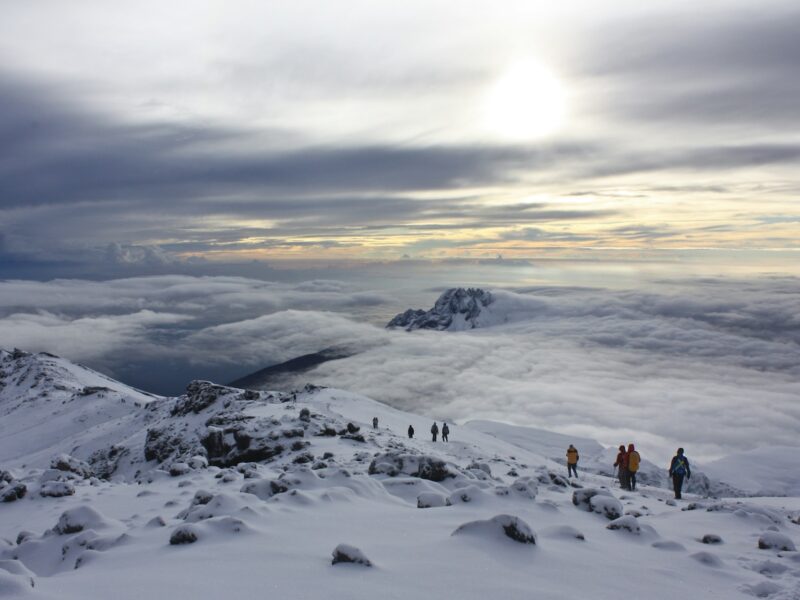
The 7 Days Lemosho Route starts on Kilimanjaro’s remote western side at Londorossi Gate, crosses the whole Shira Plateau and joins the southern circuit at Lava Tower and Barranco for a summit from Barafu Camp. It gives you the wilderness feel of Lemosho’s quiet first days with the drama of the Barranco Wall, all in a week on the mountain.
Compared with the eight-day version, this schedule crosses the plateau to Shira 2 in a single day rather than stopping at Shira 1. That makes day two longer, but keeps the valuable Karanga night before Barafu. It suits fit hikers who want a beautiful, less crowded start without adding an extra day.
At a Glance
- Duration: 7 days on the mountain; Moshi or Arusha nights either side are optional
- Route: Lemosho, joining Machame at Lava Tower, then descending via Mweka
- Gates: Londorossi Gate, about 2,250 m, to Mweka Gate, about 1,640 m
- Summit: Uhuru Peak, about 5,895 m, by way of Stella Point
- Difficulty: moderate to challenging
- Best months: about late December to early March and June to October
- Accommodation: tents, with a mess tent for meals
- Group size: private trips or small scheduled groups
Day-by-Day Itinerary
Day 1: Londorossi Gate → Mti Mkubwa
The drive to the western gate takes several hours, through farmland and forest reserves. After registration, a short transfer takes you to the trailhead, and you walk through untouched rainforest where elephant signs are occasionally seen. Camp is beneath the giant trees that give Mti Mkubwa, or Big Tree Camp, its name.
Elevation: 2,250 m → 2,750 m · Hiking time: about 3–4 hours · Habitat: dense rainforest
Day 2: Mti Mkubwa → Shira 1 → Shira 2
Leave the forest and climb into giant heather, reaching the rim of the Shira Plateau in the morning. After lunch near Shira 1 at about 3,610 m, you cross the flat plateau eastward, with Kibo ahead, to camp at Shira 2. It is a long but rewarding day.
Elevation: 2,750 m → 3,610 m → 3,850 m · Hiking time: about 7–8 hours · Habitat: heath, then high moorland
Day 3: Shira 2 → Barranco via Lava Tower
Today you meet the Machame trail. Climb to Lava Tower, about 4,630 m, for a hot lunch, then descend steeply through groundsel forest into the Barranco Valley. Sleeping lower than you climbed is excellent acclimatisation.
Elevation: 3,850 m → 4,630 m → 3,960 m · Hiking time: about 6–8 hours · Habitat: alpine desert and valley moorland
Day 4: Barranco → Karanga Camp
The morning starts with the Barranco Wall, a steep, enjoyable scramble with fine views of the Heim Glacier. Beyond it, the trail rises and falls across ridges to Karanga Camp, where you arrive for lunch and an easy afternoon.
Elevation: 3,960 m → 3,995 m · Hiking time: about 4–5 hours · Habitat: alpine ridges
Day 5: Karanga → Barafu Camp
A short, steady climb over rock and scree takes you to Barafu, the base for summit night. Rest, eat and check your summit layers with your guide.
Elevation: 3,995 m → 4,673 m · Hiking time: about 3–4 hours · Habitat: barren alpine zone
Day 6: Barafu → Uhuru Peak → Mweka Camp
Rise around midnight and climb slowly by head torch towards Stella Point. Reaching the crater rim around sunrise lifts tired spirits, and the walk to Uhuru Peak passes glaciers and ice cliffs. After the summit, descend to Barafu, then continue to Mweka Camp.
Elevation: 4,673 m → 5,895 m → 3,100 m · Hiking time: about 13–16 hours · Habitat: summit ice and scree, then heath
Day 7: Mweka → Mweka Gate
Walk down through moist forest to the gate, collect your certificate, and transfer back to your hotel.
Elevation: 3,100 m → 1,640 m · Hiking time: about 3–4 hours · Habitat: rainforest
Altitude Profile
| Day | Camp | Altitude |
|---|---|---|
| 1 | Mti Mkubwa (Big Tree Camp) | 2,750 m |
| 2 | Shira 2 | 3,850 m |
| 3 | Barranco (via Lava Tower, 4,630 m) | 3,960 m |
| 4 | Karanga | 3,995 m |
| 5 | Barafu | 4,673 m |
| 6 | Uhuru Peak, then Mweka | 5,895 m / 3,100 m |
| 7 | Mweka Gate | 1,640 m |
Included and Not Included
Included:
- Transfers to Londorossi and from Mweka
- Park, camping and rescue fees
- Licensed guide, assistants and porters
- Camping equipment and mess tent
- Cooked meals and treated water
- Oximeter checks and emergency oxygen
- Comprehensive first-aid kit
Not included:
- Flights and entry visa
- Travel insurance
- Sleeping bag and personal clothing
- Hotels unless added
- Crew tips
Is This Itinerary Right for You?
Seven days on Lemosho fits fit walkers who want scenery and solitude but have a fixed week to spare. If you can add one more day, the 8 Days Lemosho Route splits the plateau crossing and gives the best balance of scenery and acclimatisation. Our Lemosho route overview and Kilimanjaro route comparison will help you decide.
Tips for the 7 Days Lemosho Route
- Day two is long, so start early, keep snacking and walk at an even pace.
- The western forest can be wet in any season; pack gaiters and a waterproof cover for your daypack.
- Look out for the Heim and Kersten glaciers from Barranco; our page on Kilimanjaro glaciers explains how they are changing.
- Arrange cover in advance with our Kilimanjaro travel insurance checklist.
- Plan your flights and transfers with our guide on how to get to Kilimanjaro.
Check entry requirements well before departure on the official Tanzania e-visa portal. For background on the mountain’s volcanic cones and history, see the Mount Kilimanjaro article on Wikipedia.
Plan Your Lemosho Climb
Compare all the options on our Kilimanjaro climbing itineraries page, then get your tailored Lemosho proposal.