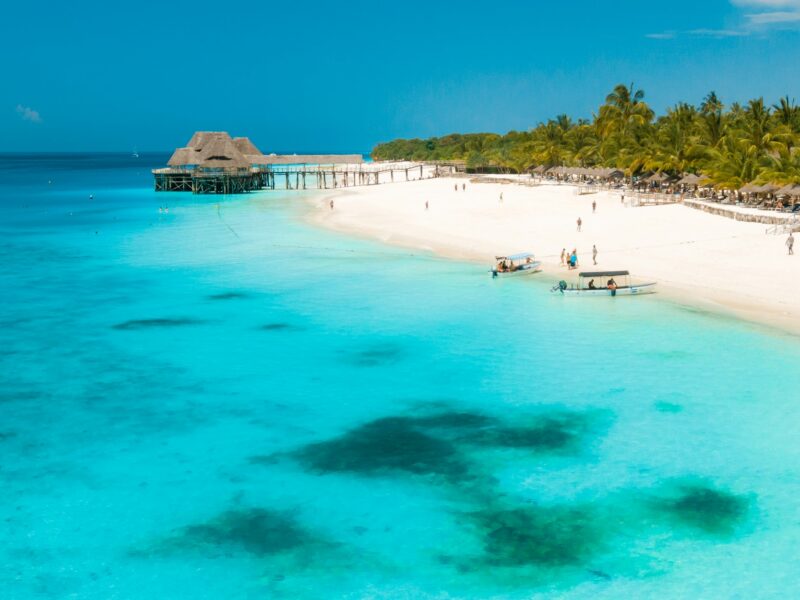
The best time to visit Zanzibar after Kilimanjaro is, conveniently, much the same as the best time to climb: the dry months from roughly June to October and from December to February. Those are the periods when the mountain is at its clearest and the island’s beaches are at their sunniest, so most climbers can come down from Uhuru Peak and be swimming in the Indian Ocean a day or two later without compromising either half of the trip.
This guide explains how Zanzibar’s seasons work, what the monsoon winds mean for the beaches, and how to match a beach stay to your climb. For an overview of the island and our beach stays, start with Zanzibar beach holidays.
How Zanzibar’s Seasons Work
Zanzibar sits just south of the equator, so it is warm all year and the seasons are defined by rain and wind rather than temperature. There are two dry seasons and two rainy seasons, and they line up closely with the pattern on the mainland.
- Long dry season, roughly June to October: lower humidity, sunny days, fresh breezes and cooler evenings. This is the most comfortable time for sightseeing in Stone Town.
- Short dry season, roughly December to February: hot and humid, with calm, clear water on many days. Ideal for snorkelling and lazy beach days.
- Long rains, around April and May: heavy downpours, high humidity and rough seas at times. Some smaller hotels close for a few weeks.
- Short rains, around November: shorter, often afternoon showers between sunny spells. The island is green and quieter.
March and the turn of each season are transitional, so expect a mix. For the wider picture across the mainland parks and the coast, see our guide to the best time to visit Tanzania.
Best Time to Visit Zanzibar After Kilimanjaro, Month by Month
The table pairs each month on the mountain with what you can usually expect on the island afterwards. It describes typical conditions only; any month can bring a surprise.
| Month | Zanzibar conditions | Good for |
|---|---|---|
| January | Hot, humid, mostly dry | Beaches, snorkelling, diving |
| February | Hottest month, usually dry | Calm seas, sandbank trips |
| March | Humid, rains approaching | Quieter beaches, relaxed pace |
| April | Long rains, heavy showers | Culture in Stone Town between showers |
| May | Rains easing late in month | Very quiet stays, green landscapes |
| June | Dry, breezy, pleasant | Sightseeing, kitesurfing |
| July | Dry, cooler evenings | All-round beach and town time |
| August | Dry, steady breeze | Kitesurfing, boat trips |
| September | Dry, warm and settled | Snorkelling, spice tours |
| October | Dry, warming up | Beaches before the short rains |
| November | Short rains, sunny spells | Green island, fewer visitors |
| December | Warm, mostly dry later on | Festive beach breaks |
Monsoon Winds and Kitesurfing
Two seasonal winds shape the island’s coastline. The kusi, from the south-east, generally blows during the long dry season in the middle of the year, while the kaskazi, from the north-east, tends to blow during the hotter months around December to February. Both make the east coast, especially around Paje, a well-known kitesurfing spot, and both cool the beaches pleasantly.
The flip side is that a strong breeze can bring choppy water and seaweed onto some east-coast beaches. If you want flat water for swimming or snorkelling, the sheltered north-west coast around Nungwi and Kendwa is often calmer, and its beaches are less affected by the large tides that expose wide sand flats on the east coast at low water.
Matching Your Beach Stay to Your Climb
The good news for climbers is that the best months on the mountain, roughly late December to early March and June to October, are also Zanzibar’s driest months. Climb Kilimanjaro in August and you will find the island breezy and sunny; climb in January and the beaches will be hot and still.
If your only option is the rainy season, you can still enjoy both. Rains on the coast often fall in heavy bursts followed by sunshine, and hotels are quieter. A few practical points help:
- Allow at least three or four nights on the island so tired legs can recover properly before you start exploring.
- Choose a beach on the north coast if you want to swim at any state of the tide.
- Book Stone Town for the start or end of your stay, not the middle, to keep transfers short.
- Leave a buffer day between descending the mountain and flying to the coast.
Our 10 days Kilimanjaro climb and Zanzibar itinerary builds these points in, and the things to do in Zanzibar after Kilimanjaro guide suggests how to fill your days.
Ramadan and Local Customs
Zanzibar is a largely Muslim island, and the holy month of Ramadan moves about ten or eleven days earlier each year. During Ramadan, many local restaurants in Stone Town close during daylight hours and life slows down, while beach hotels carry on much as usual. It is a respectful and interesting time to visit; simply dress modestly away from the beach and avoid eating or drinking in the street during the day. You can read more about the island’s history and culture on Zanzibar’s Wikipedia page, and about the old town on the UNESCO Stone Town listing.
Plan Your Climb and Beach Stay
Choosing where to stay matters as much as when: browse our Zanzibar hotels and resorts for beach and town options. Then send us your climbing dates through plan my safari, and we will suggest the best stretch of coast for that time of year.