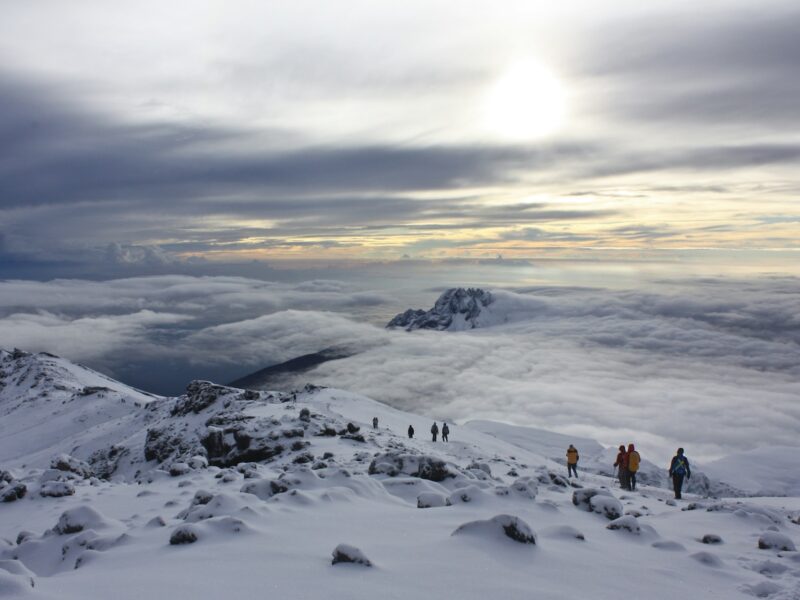
The best time to climb Kilimanjaro is generally during the two drier windows: roughly late December to early March, and June to October. In these months the trails are firmer, the views more reliable and summit night is less likely to be spoiled by snowfall. That said, climbs run all year, and the right month for you depends on how you balance weather, crowds, budget, holidays and personal timing.
Kilimanjaro sits just south of the equator, so it does not have a classic summer and winter. Instead, its seasons follow the rains. Temperatures on the mountain depend far more on altitude than on the calendar: you will walk through warm rainforest on day one and face freezing conditions near the summit whatever month you choose. This guide explains each season so you can choose with confidence.
When Is the Best Time to Climb Kilimanjaro?
For most climbers, the two dry seasons are the safest bet. January and February tend to be a little warmer, with clear mornings and occasional afternoon showers. Late June to October is usually cooler and drier still, with crisp, bright skies and very good visibility, especially from August onwards. Both periods coincide with school and holiday breaks in many countries, so the most popular routes are busier.
The months between are not off-limits. Shoulder periods such as early March, early June and early November can offer quieter trails and good conditions, with a little more risk of rain. Our Kilimanjaro weather by month guide breaks down what each month typically looks like.
Kilimanjaro Seasons at a Glance
| Period | Typical conditions | What to expect |
|---|---|---|
| Late December to early March | Mostly dry, warmer, some afternoon cloud | Popular; holiday departures fill early |
| Mid-March to May | Long rains, heavy cloud and muddy forest | Very quiet; wet gear is a real issue |
| June to October | Dry, cooler, clear skies | Peak season; best visibility |
| November | Short rains, usually brief showers | Quieter; conditions vary year to year |
The Long Rains: Mid-March to May
April and May bring the heaviest rain. The forest becomes slippery, cloud often hides the views, and higher camps can get snow. Some climbers still go in this period for the solitude, and routes on the drier northern side, such as the Rongai route, can be a sensible choice. If you climb now, invest in excellent waterproofs and pack spare dry layers in sealed bags.
The Short Rains: November
November rain usually arrives as afternoon or evening showers rather than all-day downpours. Mornings are often clear. It is a reasonable time to climb if you are flexible and want fewer people on the trail, though the conditions are harder to predict than in the main dry seasons. The timing of the short rains also shifts from year to year: some years they start in late October, in others they barely arrive before December. Pack a reliable rain jacket, a pack cover and a few dry bags, and build in a little flexibility so a wet afternoon in the forest does not dampen your spirits. Above the cloud line, November nights are often clear and starry.
Crowds and Holiday Peaks
Christmas, New Year, Easter and the European and North American summer holidays are the busiest times. Popular routes such as Machame can feel lively at camps, although the mountain rarely feels truly crowded once you are walking. If you want to celebrate on the mountain, our Kilimanjaro New Year climb is timed for the holidays. For quieter trails, consider the Northern Circuit, Rongai or Lemosho, or travel in early March, early June or November.
Timing Around the Moon
Many climbers plan summit night around a full moon, which lights the long climb from high camp without a headtorch. It is a popular choice, so these dates book up. Read how we schedule it on our Kilimanjaro full moon summit climb page. Conversely, a new moon offers spectacular star-filled skies if you enjoy astronomy.
Combining a Climb With a Safari
The dry seasons are also excellent for wildlife viewing in Tarangire, the Ngorongoro Crater and the Serengeti. If you plan to add a safari, see our Kilimanjaro and safari options; the same calendar works well for both.
Factors Beyond the Weather
- Your own calendar: the best month is one where you can commit enough days for a well-acclimatised route.
- Fitness timing: allow around three months of training before your departure.
- Flights: holiday periods push up demand for flights into Kilimanjaro International Airport.
- Glaciers and snow: the summit area can hold fresh snow after rainy spells, which looks beautiful but makes the final ascent harder.
- Vegetation: the zones described in our climate and vegetation zones guide look different by season, with forest at its lushest after the rains.
Summit Night Conditions All Year
Regardless of season, summit night usually begins around midnight and is cold, often well below freezing, with wind chill making it feel colder still. Layering is essential in every month, so check our Kilimanjaro gear list before you pack. For the latest park regulations, consult the Tanzania National Parks website, and for geographic background the Mount Kilimanjaro article on Wikipedia is a useful read.
Our Recommendation
If you have a free choice, aim for January to early March or late June to October, and pick an itinerary of seven days or more. More days generally give you a better chance of reaching the summit, whatever the season. Browse all the articles in our Kilimanjaro climbing guide for more planning help, then ask us to suggest dates that suit your schedule.