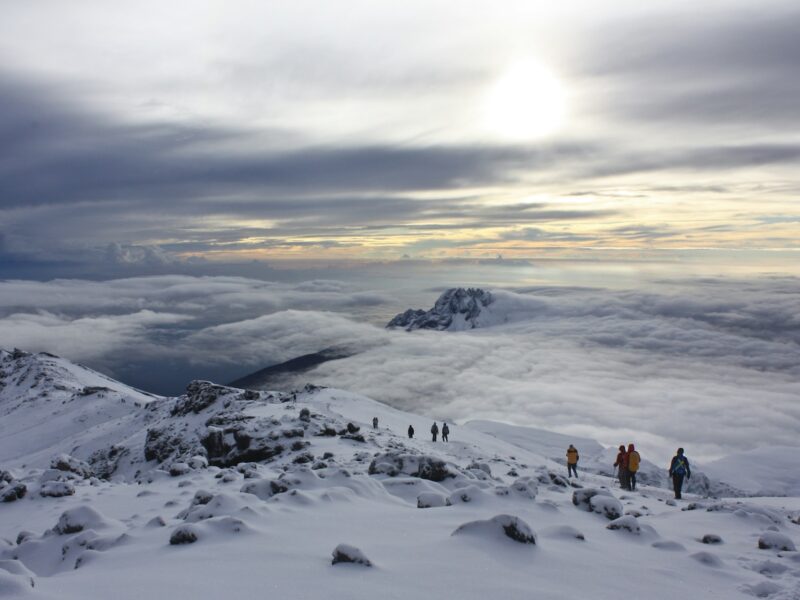
If you are wondering how to train for Kilimanjaro, the good news is that you do not need climbing skills, ropes or gym records. Kilimanjaro is a long, non-technical trek. What you need is the stamina to walk for several hours on consecutive days, the leg strength to handle steep ascents and descents, and enough comfort in your kit that nothing distracts you when the air gets thin.
This page sets out a practical 12-week training structure, explains what to prioritise, and shows how to test yourself before you fly. You will find related advice throughout our Kilimanjaro climbing guide.
What Kilimanjaro Asks of Your Body
A typical climbing day involves four to seven hours of walking at a slow pace, often on uneven paths. Summit night is the exception: you set off around midnight and may be on your feet for twelve hours or more by the time you return to camp. The final descent the next day can also be long, and it is hard on knees and thighs.
The real challenge is altitude, which training cannot remove. Good fitness does, however, mean each day costs you less energy, so you have more in reserve for the summit push. To understand the overall difficulty, read how hard it is to climb Kilimanjaro.
Before starting any new exercise programme, speak to your doctor, particularly if you have a health condition or have not exercised regularly for a while.
How to Train for Kilimanjaro: The Four Pillars
- Hiking on hills. The most specific training. Walk on real trails with height gain, carrying a daypack.
- Steady cardio. Cycling, swimming, brisk walking, rowing or stair machines build your aerobic base.
- Leg and core strength. Squats, lunges, step-ups and planks protect your knees on the descent and keep you stable on rocky ground.
- Back-to-back days. Walking on two or three consecutive days teaches your body to recover overnight, just as it must on the mountain.
A 12-Week Training Plan
Treat this as a framework and adapt it to your starting point, schedule and terrain. If you are already active, you may begin at week four. If you are new to exercise, give yourself longer.
Weeks 1–4: Build the Base
Aim for three or four sessions a week. Do two cardio sessions of 30 to 45 minutes at a comfortable effort, one strength session focusing on legs and core, and a weekend walk of two to three hours. Wear the boots you plan to climb in from the very first weekend, so they mould to your feet.
Weeks 5–8: Add Hills and Load
Increase the weekend walk to four or five hours and seek out as much ascent as you can find. Carry a daypack of around the weight you will have on the mountain: water, layers, snacks and a camera. Add a second strength session and include step-ups with your pack. If you have no hills nearby, long stair sessions or an incline treadmill are useful substitutes.
Weeks 9–11: Peak Training
This is your hardest block. Plan at least two weekends with back-to-back hikes of five hours or more. Include one very long day of seven to eight hours to rehearse a summit-style effort. Keep midweek cardio and strength, but prioritise recovery: sleep well, eat properly and stretch.
Week 12: Taper
Cut your training volume by about half. Keep moving with gentle walks and light sessions so you stay loose, but arrive in Tanzania rested rather than tired. Avoid trying anything new in the final fortnight.
Train Your Descent, Not Just Your Ascent
Many climbers focus on going up and are surprised by how sore they feel coming down. On the final day you may descend from around 3,100 m at Mweka Camp to about 1,640 m at Mweka Gate, after having already dropped from the summit the day before. Downhill walking loads the front of the thighs and the knees.
Include steady descents in your hill walks, practise using trekking poles, and do slow, controlled lowering movements in your strength work. Climbers over fifty often find this especially valuable; our page on climbing Kilimanjaro over 50 has more advice.
Test Your Kit While You Train
Training walks are the ideal time to find blisters, rubbing straps or a jacket that lets in rain. Use every long walk to try the items on our Kilimanjaro gear list:
- Boots that are properly worn in, with the socks you will take.
- Your daypack, adjusted for comfort with a full load.
- Base layers and a fleece for cooler mornings.
- A headtorch, so you are familiar with it before summit night.
- Trekking poles, if you plan to use them.
Mental Preparation
Kilimanjaro can be as much a mental test as a physical one. Summit night is cold, dark and slow, and you may feel nauseous or tired. Long training days in poor weather build the patience and resilience you will need. Practise walking at a deliberately slow pace too; it can feel strange, yet “pole pole” is exactly how you will move on the mountain.
It also helps to know the plan in advance. Read our summit night guide and our advice on how to acclimatise on Kilimanjaro, so nothing comes as a surprise.
What Training Cannot Do
No amount of training can ensure you will acclimatise well. Altitude affects people unpredictably, and some very fit climbers struggle while others with modest fitness do well. The best protection is a well-designed itinerary with enough days, a slow pace and honest communication with your guide. Background on the mountain itself is available on Wikipedia’s Mount Kilimanjaro page, and the effects of altitude on the body are covered in its article on altitude sickness.
First-Timers and Beginners
If you have never done a multi-day trek, Kilimanjaro is still achievable with sensible preparation. Our Kilimanjaro for beginners page explains what first-timers should know, and the Kilimanjaro climbing itineraries hub shows which routes give the gentlest profile.
Ready to Set a Date?
A fixed climb date is a great motivator for training. Share your timeframe and fitness level through our planning form, and we will recommend a route and length that suit you.