Highlights of Ngorongoro Crater
- Black rhino sightings
- Lions, hyenas and elephants on the crater floor
- Flamingos on Lake Magadi
- Views from the crater rim
Best time to visit
All year; June–October is driest, November–May is greener and quieter.
Getting there
Around 3 hours by road from Arusha.
Ideal for
Short safaris, Big Five seekers, families.
Want to include Ngorongoro Crater in your trip? Browse our Tanzania safari packages or ask for a tailor-made quote.
The world’s largest intact caldera
Around two to three million years ago a huge volcano collapsed in on itself, leaving the Ngorongoro Crater: a caldera about 19 km across, roughly 260 square kilometres in area and some 600 metres deep. Its floor holds grassland, swamps, fever-tree forest and a soda lake, supporting a permanent population of large mammals that do not need to migrate.
The crater lies within the Ngorongoro Conservation Area, a UNESCO World Heritage Site where Maasai pastoralists live alongside wildlife. This unique land-use model means you will see Maasai herders and cattle on the highlands and rim.
Wildlife on the crater floor
- Black rhino: one of the best places in East Africa to see this endangered species
- Lions, including large males, and spotted hyenas in high density
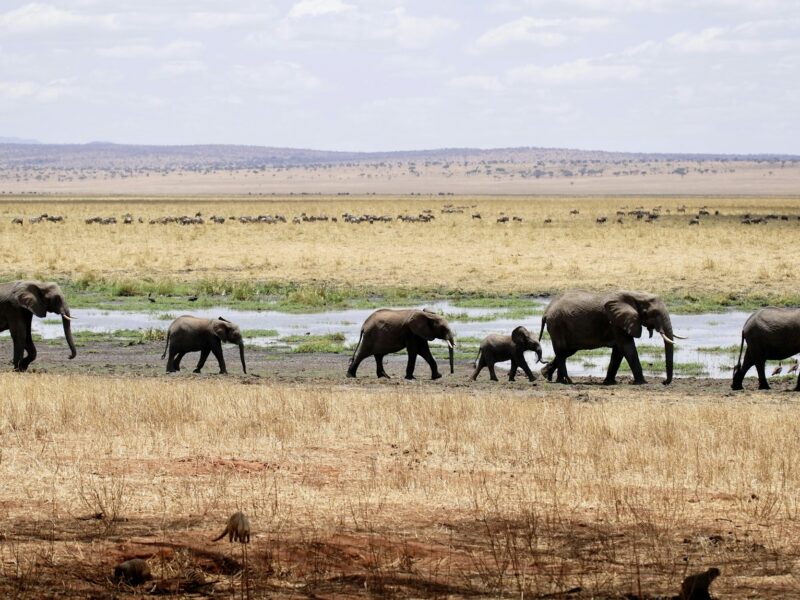
- Elephants, mostly old bulls, in the Lerai forest and swamps
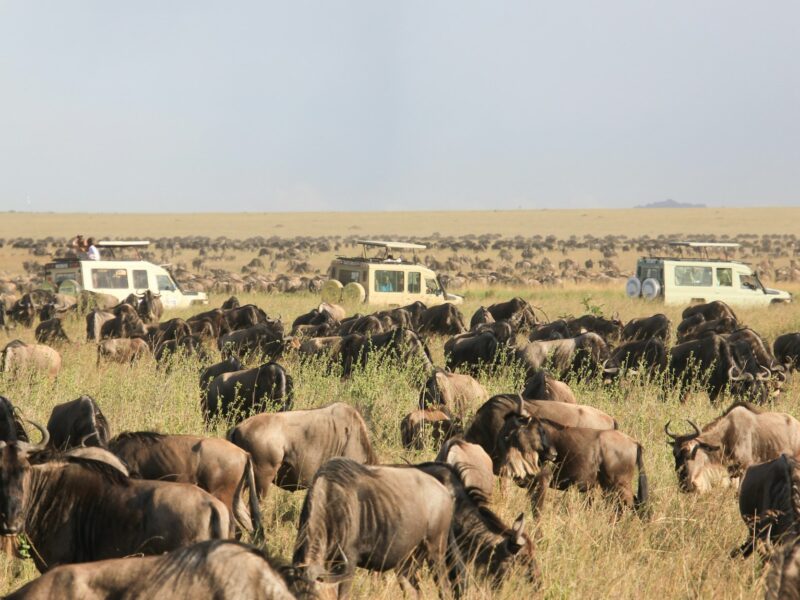
- Buffalo, wildebeest, zebras, Grant’s and Thomson’s gazelles, elands
- Hippos at the Ngoitokitok pool; flamingos on Lake Magadi in season
- Golden jackals, servals and abundant birdlife, including kori bustards and crowned cranes
A day in the crater
Most visitors descend early via the Seneto road, spend the morning on the floor and take a picnic lunch at Ngoitokitok, then climb out via the Lerai road. Park rules limit each vehicle to about six hours on the crater floor per day, so an early start makes the most of the time.
Beyond the crater
- Olduvai Gorge: one of the most important sites for the study of human origins, with a small museum
- Empakaai Crater: a hike down to a flamingo-lined crater lake
- Olmoti Crater: a short walk to a waterfall viewpoint
- Laetoli footprints site: the 3.6-million-year-old hominin footprints (replica display)
- Maasai cultural visits on the highlands
Best time to visit
The crater is excellent all year. June to October is dry and clear; November to May is greener and quieter, with newborn animals in the early months. Mornings on the rim can be cold, often below 10 °C, so pack a warm layer.
Where to stay
Staying on the crater rim gives sunrise views over the caldera and the earliest access. Karatu, 30 minutes away, offers lodges set among coffee farms at lower rates. Budget travellers use the Simba public campsite on the rim.
Combining the crater
The crater fits into every northern itinerary: as a day trip from Arusha, in the 2-day Tarangire and Ngorongoro safari, or at the end of a Serengeti safari.
The crater rim and highlands
The crater rim sits at about 2,300 m, covered in misty montane forest where elephants and buffalo sometimes wander near the lodges. Sunrise over the caldera from the rim is one of the great sights of Africa. The surrounding highlands are home to Maasai communities, and you will pass their bomas and herds as you drive towards the Serengeti.
Tips for a great crater visit
- Start early to reach the floor before most vehicles
- Bring warm layers for the rim and sun protection for the floor
- Use binoculars to scan for rhinos on the open plains
- Stay overnight on the rim for the best sunset and sunrise views
Conservation success
The crater’s black rhino population has been carefully protected for decades, and rangers monitor individual animals. The Ngorongoro Conservation Area also supports Maasai pastoralism, making it a pioneering example of people and wildlife sharing the same land.
Safari itineraries that include this destination
- Ngorongoro Crater Day Trip (1 Day)
- 2 Days Tarangire & Ngorongoro Crater Safari (2 Days)
- 3 Days Private Serengeti & Ngorongoro Safari (3 Days)
- 3 Days Tarangire, Lake Manyara & Ngorongoro Safari (3 Days)
- 4 Days Tanzania Budget Camping Safari (4 Days)
- 4 Days Private Honeymoon Safari (4 Days)
- 4 Days Private Tarangire, Manyara & Ngorongoro Safari (4 Days)
- 4 Days Safari & Zanzibar (4 Days)
- 4 Days Serengeti & Ngorongoro Crater Safari (4 Days)
- 5 Days Luxury Tanzania Safari (5 Days)
- 5 Days Private Ndutu Calving Safari (5 Days)
- 5 Days Safari & Zanzibar (5 Days)
- 5 Days Tanzania Northern Circuit Safari (5 Days)
- 6 Days Budget Camping Safari (6 Days)
- 6 Days Family Safari in Tanzania (6 Days)
- 6 Days Great Migration Safari (6 Days)
- 6 Days Private Senior Safari (6 Days)
- 6 Days Serengeti Safari & Zanzibar (6 Days)
- 6 Days Tanzania Safari (6 Days)
- 7 Days Calving Season Safari in Ndutu (7 Days)
- 7 Days Private Luxury Safari (7 Days)
- 7 Days Private Walking & Wildlife Safari (7 Days)
- 7 Days Safari & Zanzibar (7 Days)
- 7 Days Tanzania Safari (7 Days)
Where to stay: ngorongoro lodges and camps
Compare our hand-picked ngorongoro lodges and camps, including Ngorongoro Serena Safari Lodge, Lemala Ngorongoro Tented Camp, The Highlands, Entamanu Ngorongoro, or browse all Tanzania safari accommodation.
The Crater on a Tanzania Private Safari
Descending into the Ngorongoro Crater with your own guide is one of the best moments of any Tanzania private safari. Because the caldera is enclosed, sightings can be close and plentiful, and travelling privately means you choose whether to wait for a black rhino on the plains, watch flamingos on Lake Magadi or settle by a hippo pool for a picnic.
Why go private in the crater
- Early descents for quieter morning light
- Time to scan for rhino rather than moving on quickly
- Lunch stop and timing chosen with your guide
- Easy to combine with the Serengeti or Tarangire
The crater is around three hours by road from Arusha, so it works well on short trips and for families. Find it in our Tanzania safari packages, or plan your private safari and we will suggest lodges on or near the rim.
Related reading from our Safari Journal
Further reading
Learn more from independent, authoritative sources: